
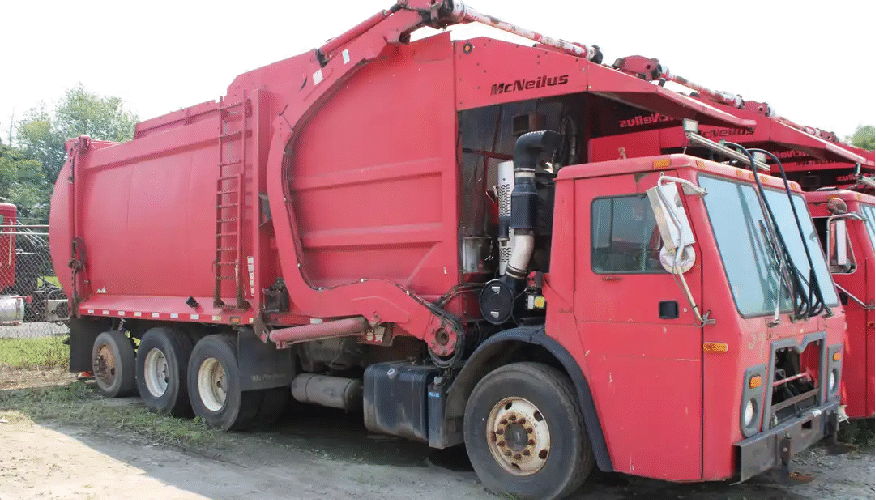
Choosing the right refuse truck can have a major influence on the performance and profitability of a waste collection business. A suitable vehicle helps operators manage collection routes, lift containers, compact refuse, and transport waste efficiently. On the other hand, selecting a truck that does not match the workload can lead to unnecessary expenses, operational delays, and maintenance challenges.
For companies considering a McNeilus front loader for sale, understanding the available models and specifications is an important first step. McNeilus offers front loaders designed for different commercial and residential applications. By reviewing route requirements, body capacity, lifting capability, chassis options, and service support, business owners can identify a configuration that suits their operations. Atlantic Heavy Duty can also help buyers explore available McNeilus equipment and related support.
Start by Understanding Your Business Operations
Every waste collection business has its own operating requirements. Some companies focus on commercial dumpsters at restaurants, retail stores, and office buildings. Others handle larger industrial locations or a combination of commercial and residential routes.
Begin by reviewing the number of stops completed each day and the amount of waste collected at each location. Consider how frequently containers need to be emptied and how far the truck must travel between stops and disposal facilities.
You should also examine the physical conditions of your routes. Narrow access roads, low-clearance areas, tight turning spaces, heavy traffic, and uneven surfaces can influence vehicle selection.
A clear understanding of these factors makes it easier to identify the right truck capacity and configuration.
Compare the Atlantic Series and Meridian
McNeilus offers different front loader models, including the Atlantic Series and Meridian. Both are designed for waste collection, but their available capacities and intended applications provide different options for fleet operators.
The Atlantic Series is a heavy-duty front loader designed for demanding commercial and residential routes. It is available in 36, 40, 43, and 45 cubic-yard body capacities.
The Meridian model offers body capacities of 32, 36, 40, and 43 cubic yards. It is designed to balance strength and versatility for commercial and residential collection. McNeilus lists a 10,000-pound arm lift capacity and a 14-ton payload capacity for the Meridian.
The best choice depends on the company’s collection volume, route conditions, payload requirements, and budget. Buyers should compare the exact specifications of the configurations available rather than assuming every vehicle has identical equipment.
Select an Appropriate Body Capacity
Body capacity affects how much refuse a truck can hold by volume. Choosing an appropriate size can help businesses organize disposal trips and manage collection schedules.
A larger body may be beneficial for routes with substantial waste volumes. However, body capacity must be considered alongside payload limits. Heavy materials can cause a truck to reach its permitted weight before the body is completely full.
Fleet managers should review historical collection data, typical waste density, and the number of stops assigned to each vehicle. This information can help determine whether a 32, 36, 40, 43, or 45 cubic-yard configuration is appropriate.
It is also important to confirm that the selected truck complies with applicable road and weight regulations.
Evaluate Lifting Capacity and Container Compatibility
A front loader must be compatible with the dumpsters used on its assigned routes. The lifting arms need to handle the containers safely and consistently within the equipment’s rated limits.
The McNeilus Atlantic Series offers arms rated for lifting up to 10,000 pounds, depending on configuration. The Meridian also lists a 10,000-pound arm lift capacity.
Before choosing a vehicle, measure the dumpsters used by your customers and review their lifting points and typical loaded weights. Consider whether the business uses several container sizes or a standardized container system.
Compatibility should be confirmed with the supplier. Operators should never attempt to lift containers that exceed the rated capacity or are unsuitable for the equipment.
Choose the Right Chassis Configuration
The chassis is an important part of the complete refuse truck. It affects weight distribution, maneuverability, vehicle dimensions, driver comfort, and compatibility with the refuse body.
McNeilus front loaders are available with chassis options from manufacturers such as Peterbilt, Kenworth, Mack, Autocar, and Battle Motors. The specific options depend on the model and configuration.
When comparing chassis, consider engine performance, transmission, wheelbase, axle ratings, gross vehicle weight rating, cab layout, and local service availability.
Businesses operating in congested areas may place particular importance on maneuverability and visibility. Companies serving longer routes may also consider engine performance and driver comfort. A qualified dealer can help explain the differences between available chassis configurations.
Consider Compaction Performance
Compaction technology helps compress collected refuse inside the truck body. This allows the vehicle to make better use of its available space and may reduce the number of disposal trips required during a route.
McNeilus front loaders use Excalibre packing cylinders with a patented tool steel shaver and nitrided rods. These components are designed to resist wear and corrosion while helping reduce hydraulic contamination.
When evaluating a truck, ask about its packing system, maintenance requirements, and operating procedures. Consider the type of refuse collected because different materials can have different compaction characteristics.
Remember that effective compaction does not remove legal payload restrictions. The truck must always operate within its approved weight limits.
Review Controls and Diagnostic Technology
The operator interface can influence how easily drivers manage the vehicle throughout the working day. Controls should be understandable, and maintenance personnel should have access to useful information when troubleshooting problems.
McNeilus offers its CODE controls system on the front loader product line. It provides diagnostic and troubleshooting information that can help users investigate equipment conditions.
During the selection process, request an explanation or demonstration of the controls available on the specific vehicle. Ask how diagnostic information is accessed and what training is recommended for drivers and technicians.
Understanding these features before delivery can make it easier to introduce the vehicle into an existing fleet.
Think About Maintenance and Parts Support
Maintenance requirements should be part of the purchasing decision from the beginning. Hydraulic systems, lifting arms, packing components, chassis parts, electrical systems, and tires all need regular attention.
McNeilus front loaders feature a clean headframe designed to improve serviceability and protect important hydraulic and electrical components. However, the vehicle still requires inspections and servicing according to the manufacturer’s instructions.
Before purchasing, ask about recommended maintenance intervals, warranty coverage, replacement parts, and access to qualified technicians. Consider whether the supplier can assist with routine service and unexpected repairs.
A strong maintenance plan can help protect the investment and reduce disruptions to collection routes.
Calculate Your Budget and Long-Term Costs
The right truck should meet operational requirements while remaining financially practical. In addition to the purchase price, include financing costs, insurance, fuel, maintenance, parts, licensing, and driver training in your budget.
Estimate how frequently the truck will operate and how much work it is expected to complete. Compare the expected costs of different configurations rather than focusing only on the initial price.
A truck with more capacity may provide value for a high-volume route, while a smaller configuration may be more suitable for a business with lower collection requirements. The goal is to select equipment that provides the capabilities the business actually needs.
Work With an Experienced Supplier
A knowledgeable supplier can help buyers compare models, review specifications, and understand available equipment options. This support is especially useful when a company is purchasing a front loader for the first time or expanding an existing fleet.
Atlantic Heavy Duty provides refuse truck sales, service, parts, and financing support. Its McNeilus front loader offerings include the Atlantic Series and Meridian models. Buyers can discuss their route requirements and ask about available configurations, chassis options, and support services.
Before making a final decision, request current specifications and confirm the exact features included with the vehicle. Discuss delivery expectations, warranty terms, and service arrangements as well.
Conclusion
Choosing the right McNeilus front loader for a waste collection business requires a careful review of route demands, body capacity, lifting capability, chassis configuration, compaction technology, maintenance, and budget. The Atlantic Series and Meridian provide different options for commercial and residential collection requirements. By matching the truck’s specifications to actual operating needs and considering long-term support, businesses can make a more confident investment. Atlantic Heavy Duty can help prospective buyers explore available McNeilus front loader options and obtain the information needed to select suitable equipment.