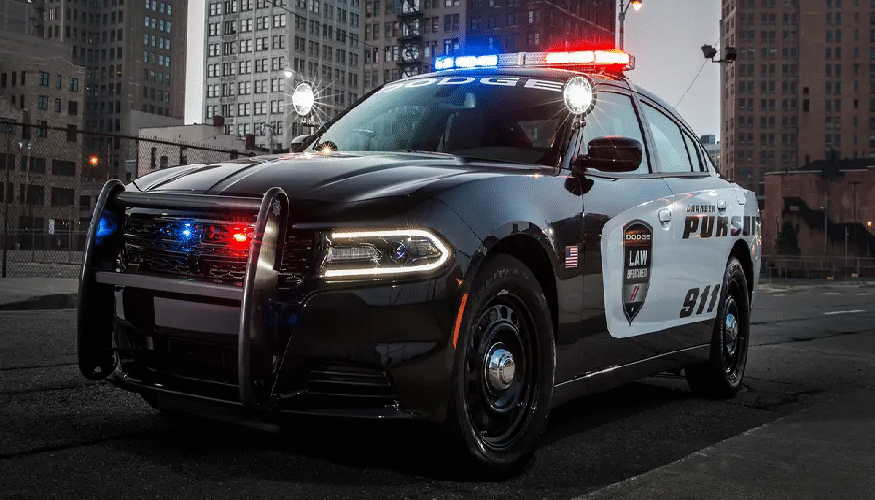
Emergency vehicle graphics serve a similar purpose: they help identify vehicles quickly and improve public safety visibility. Police cars, fire trucks, and ambulances all rely on graphic design elements such as reflective vinyl, bold lettering, and high-contrast colors.
However, ambulance graphics follow a slightly different set of design priorities. Because ambulances transport patients and operate in medical environments, their graphics must balance visibility, identification, and privacy.
Understanding these differences helps departments choose graphics that support both safety and functionality.
Ambulance Graphics vs. Other Emergency Vehicles: 7 Key Differences
Below, we’ve covered seven ways ambulance graphics tend to differ from other emergency vehicle graphics.
1. Patient Privacy Considerations
Beyond design, ambulance graphics also play a big part in protecting patient privacy.
Window Graphics and Frosted Vinyl
You’ll often see perforated vinyl or frosted materials on an ambulance’s rear and side windows. This way, medical crews can see outside without passersby seeing inside the patient compartment.
Limited Interior Visibility
Police vehicles and fire trucks rarely require this type of privacy treatment. Ambulances, on the other hand, must protect sensitive medical situations during transport.
Read More: My journey: Unmasking the Truth About Buying A Reconditioned BMW Engine in the UK
2. Medical Symbol Integration
Ambulance graphics frequently include universal medical symbols.
The Star of Life
One of the most recognizable elements on an ambulance is the Star of Life. This blue symbol identifies emergency medical services across several countries. Although the symbol originated in the United States, you’ll also see it in Japan, China, Singapore, and Iran, among other countries.
Medical Cross Symbols
Some departments also include medical crosses or healthcare-related emblems to distinguish ambulances from other emergency vehicles.
Police vehicles tend to use shields or department badges, while fire trucks often feature department crests.
3. Greater Emphasis on Rear Visibility
Ambulances spend a substantial amount of time stopped on roadways while loading and unloading patients.
Chevron Safety Patterns
Rear chevron patterns are a defining feature of many ambulance graphics because they dramatically increase visibility for approaching drivers.
These diagonal stripes are typically made from reflective vinyl and arranged in alternating colours such as red and yellow or lime and yellow.
The pattern creates a strong visual signal that quickly alerts drivers to an approaching emergency vehicle.
This becomes especially important during roadside medical responses, nighttime operations, and poor weather conditions when visibility may be limited.
When headlights hit reflective chevron material, the pattern reflects light back toward the driver, helping them recognize the vehicle sooner and slow down safely.
In many jurisdictions, chevron patterns are also recommended or required for rear-facing emergency vehicle markings due to their proven ability to reduce collisions involving parked emergency vehicles.
Read More: From Ferrari to Lamborghini: Exotic Cars That Steal the Spotlight at Any Event
High-Visibility Striping
High-visibility striping is another design element commonly used on ambulances to improve safety around the rear of the vehicle.
Reflective striping is often applied around rear doors, bumper edges, and lower vehicle boundaries to clearly outline the ambulance’s shape.
These markings help drivers quickly understand the size and position of the vehicle, particularly on dark roads or highways where large vehicles can otherwise blend into the background.
The reflective material catches light from headlights and streetlights, making the vehicle easier to see from a distance.
Striping around the rear doors also highlights key access points where paramedics frequently enter and exit the vehicle while transporting patients.
Fire trucks often use chevron patterns and reflective striping, but ambulances might rely on these markings even more heavily.
Because ambulances frequently stop on roadways, at accident scenes, or in residential areas during medical calls, highly visible rear markings play an important role in protecting both medical crews and passing motorists.
4. Larger Identification Markings
Ambulance graphics typically include bigger text and identification numbers.
Unit Numbers
Large unit numbers help dispatch teams, hospital staff, and other emergency responders quickly identify specific vehicles.
Medical Service Labels
Ambulances tend to have labels like “EMS,” “Paramedic,” or “Emergency Medical Services.” These labels make it clear to the public that the vehicle has a specific role to fulfill.
Police vehicles, in contrast, often prioritize department names or law enforcement insignia.
5. Use of Calming Color Schemes
Ambulance graphics sometimes incorporate colors designed to convey medical authority while maintaining a calm appearance.
Of course, the graphics and colors still need to make an impact, but subtle changes can shift the vehicle’s image just a bit.
Blue and White Combinations
Blue-and-white color palettes are common. These tones are associated with healthcare and professionalism.
Reduced Aggressive Color Contrast
Police vehicles often rely on bold black-and-white schemes. Ambulances may use softer color combinations while still maintaining high visibility.
In turn, you get a professional appearance that still supports a recognizable medical authority.
6. Multi-Surface Graphics on Larger Vehicles
Ambulances typically have larger box-style bodies than patrol cars.
Additional Graphic Space
The larger surface area allows for graphics on multiple panels, including:
- Side compartments
- Rear doors
- Roof panels
Expanded Messaging Opportunities
Departments may include additional information such as emergency numbers, department websites, or community outreach messaging.
This expanded space allows ambulance graphics to convey more information than those on smaller emergency vehicles.
7. Functional Markings for Medical Operations
Some ambulance graphics serve operational purposes rather than purely visual design.
Door and Equipment Labels
Markings may identify equipment compartments, oxygen storage areas, or access points.
Reflective Edge Markings
Edges of doors and compartments may include reflective outlines to help crews locate equipment quickly in low-light conditions.
These markings aren’t necessarily as common on other emergency vehicles, but they still play an important part in ambulance operations.
How to Pick the Right Ambulance Graphics
Designing ambulance graphics should never be an afterthought. The truth is, it requires a careful balance between safety, visibility, and functionality, and it takes time and expertise to strike that balance.
For example, your department must consider factors like reflective materials, symbol placement, vehicle size, and the visibility of markings from multiple angles. High-quality materials and thoughtful design help ensure graphics remain durable and readable for years of service.
Doing all of this on your own can be tough. Fortunately, working with experienced emergency vehicle graphic designers helps departments create graphics that support both operational needs and public recognition.
Level Up Your Emergency Vehicle Graphics
Well-designed ambulance graphics accomplish several goals. Among them: improving visibility, reinforcing public trust, and supporting emergency medical teams as they serve their communities.
Whether your department is updating an existing fleet or designing graphics for new vehicles, working with a professional graphics provider can help bring your vision to life while meeting safety standards.
Contact a professional emergency vehicle graphics team to discuss options for reflective materials, custom layouts, and full- or partial-vehicle wraps for your ambulance fleet.
The team at Graphic Designs International is well-versed in creating graphics that last for all kinds of emergency services companies, including ambulances, police fleets, and fire trucks.
Contact them today for hands-on help with your fleet.